The practice
About
Hamish Cooper MRICS, Chartered Building Surveyor.
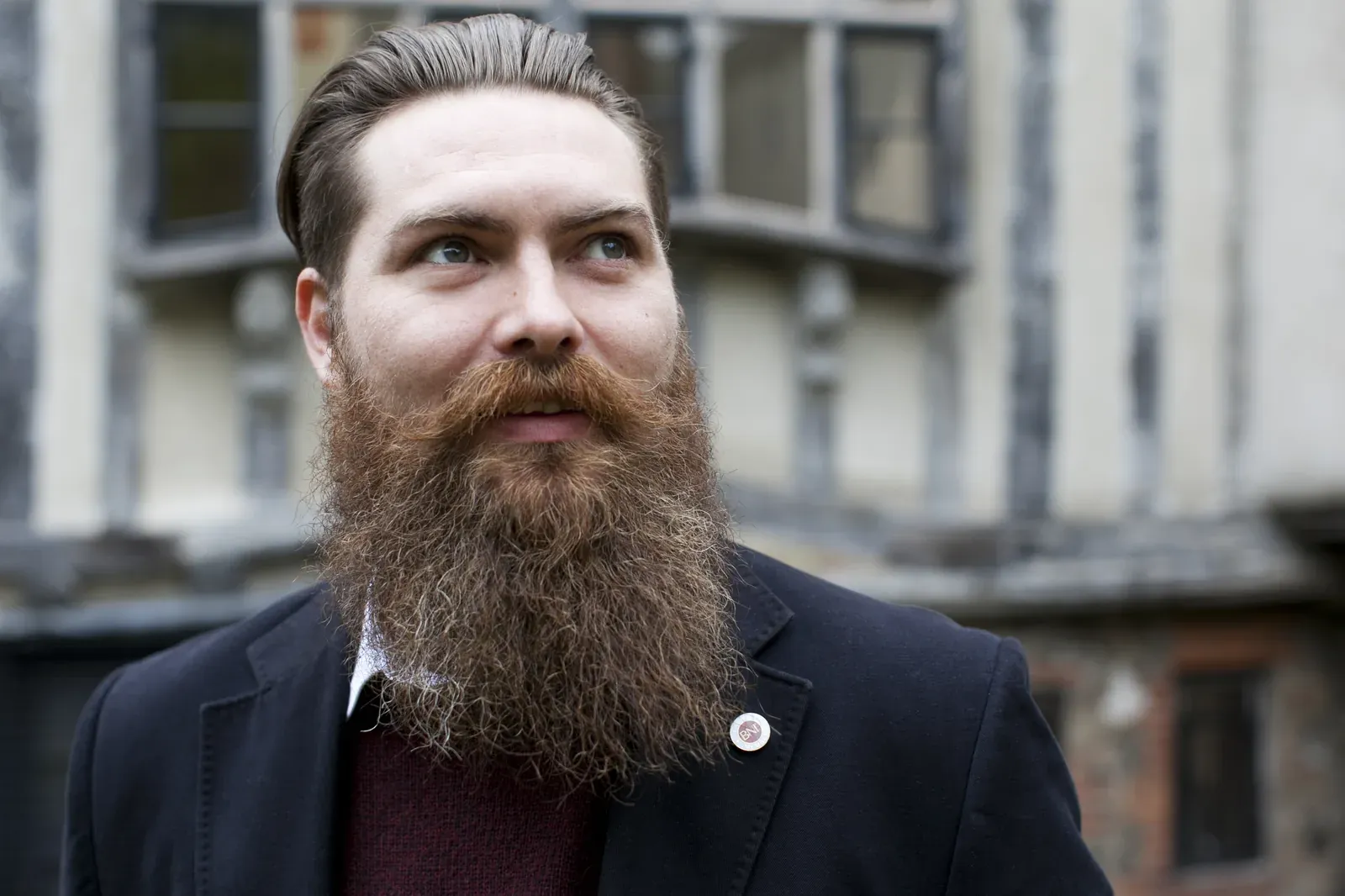
Buildings have more to say than might be obvious to an untrained eye. A crack can tell you whether a wall is still moving or whether it has stopped and found a comfortable place for itself. A stain on a wall can tell you whether water is getting in from above, from below, or from inside the wall itself. A repair can tell you something about whoever carried it out: what they understood, what they missed, what knowledge and materials they were working with at the time. Reading all of this is a skill; the product of years of attention, accumulated case-by-case, building-by-building, until the language of old buildings begins to feel natural.
I have been at this for over twenty years, now.
Career history
| 2026–present | Principal | Cooper & Codex |
|---|---|---|
| 2017–2025 | Building Surveyor | National Trust, Midlands & East of England |
| 2014–2017 | Chartered Building Surveyor & RICS Registered Valuer | Snow Lawfield & Co., Bury St Edmunds , owned by Anderson Wilde & Harris |
| 2011–2014 | Chartered Building Surveyor | Ingleton Wood LLP, Norwich |
| 2006–2011 | Graduate Surveyor | Watsons, Norwich |
Qualifications and membership
- Membership
-
- Chartered Member, Royal Institution of Chartered Surveyors (MRICS, 2013; membership no. 1262272). Thirteen years post-qualification experience.
- Education
-
- Postgraduate Diploma in Surveying Practice, College of Estate Management, Reading (2008–2009).
- BA (Hons) Architecture, University of Westminster, London (2002–2007).
- Key CPD
-
- National Trust Leading for Climate Action (2025)
- National Trust Climate Vulnerability (2023)
- CIOB Built Heritage Lessons for Resilience (2022)
- National Trust Sustainable Design Tool (2022)
- RICS JCT MW2016 Practical Training (2019)
- National Trust Introduction to 'Spirit of Place' (2019)
- CIOB Management of Conservation Works (2018)
- National Trust Project Management for Practitioners (2018)
- National Trust Essential Consultancy Skills (2018)
- National Trust Damp and Decay (2017)
- National Trust CDM Regulations in Practice (2017)
- RICS Surveys in Practice (2016–2017)
- RICS/SPAB Conservation Summer School (2016)
- RICS Valuation Level 3 & Valuer Registration (2015–16)
I started in general practice in Norwich in 2006, where four and a half years across two very different departments gave me a foundation that I've been building on ever since. In survey and valuation I learned the core professional craft: building surveys, defect reports, schedules of condition, boundary disputes. In property management I learned how to look after property portfolios over the long term: to plan for their maintenance, to hold contractors to account and keep owners and occupiers properly informed. I had responsibility for the latent defect programme on a £275 million city-centre mixed-use development. The instinct for keeping things recorded and navigable was, I think, already forming.
From there I moved into multi-disciplinary construction consultancy, where three and a half years of work across the education, health, commercial and residential sectors made me a Chartered Building Surveyor in 2013. Working in operational hospitals and SEN schools teaches you to think carefully before you act; these are buildings where the consequences of a miscalculated programme or a poorly specified repair are not easily undone. You learn to manage the construction process with forethought and precision.
You learn to manage the construction process with forethought and precision.
After that I spent three years specialising in historic residential survey across Norfolk and Suffolk. This is the work I find most engaging, and it is where I began to understand just how particular traditional buildings are; how a solid-walled Georgian farmhouse behaves differently in every climate condition and every orientation, how you can't apply standardised thinking to buildings whose construction predates standardisation, how you have to read each one on its own terms.
I also spent several months in a London office, working in the prime central London market, where I took the RICS valuation competency to Level 3 and gained Registered Valuer status. I no longer hold it and I don't offer valuations, but the discipline stays with me.
Then came eight and a half years with the National Trust.
The properties were exceptional: the Grade I Blickling Hall, Felbrigg Hall and the Elizabethan House Museum in Great Yarmouth; Grade II* Horsey Windpump, Burnham Overy Tower Windmill and Houghton Mill; the Scheduled Monuments at Ramsey Abbey Gatehouse and Willington Dovecote and Stables; as well as the extensive associated estates of traditional and vernacular buildings.
What shaped my approach most was the discipline of the long view. You can't focus on a single survey or a single project without stepping back and framing the building's life beyond your own tenure, beyond your own lifespan. You need to weigh what decisions made today will cost or save in thirty, forty, fifty years' time.
You have to resist the expedient repair and hold out for the right one, and you need to make the most of opportunities where access and budget allow. You develop a sense of what a building actually needs, which is distinct from what it appears to be asking for in the moment.
You have to resist the expedient repair and hold out for the right one.
I left in December 2025. The door that closed was one I'd been walking out of, slowly, for several years. Cooper & Codex opened six months later.
If an old building is on your mind, whether one you’re buying, one you hold or one behaving in ways you can’t account for, get in touch. I aim to respond within one working day.
Get in touch